SuperMoney Systems Analysis
SuperMoney Systems
Analysis
AI-augmented advertiser onboarding portal
PROBLEM
The problem: SuperMoney, a Santa Ana fintech, was onboarding each new advertiser by hand. Every advertiser sends data files in their own format, and a developer had to manually inspect the columns, write SQL to map them to SuperMoney's schema, and debug it by running the pipeline until it worked. That took two to four hours per advertiser and 100% developer involvement, at roughly $200 to $400 in labor each time. With no validation step, errors only surfaced weeks later at month-end, leaving over 9,700 records sitting in error queues.
The root cause was simple: the pipeline was built as an early-stage solution that prioritized function over scale, and never changed as the company grew past 100 advertisers.
APPROACH
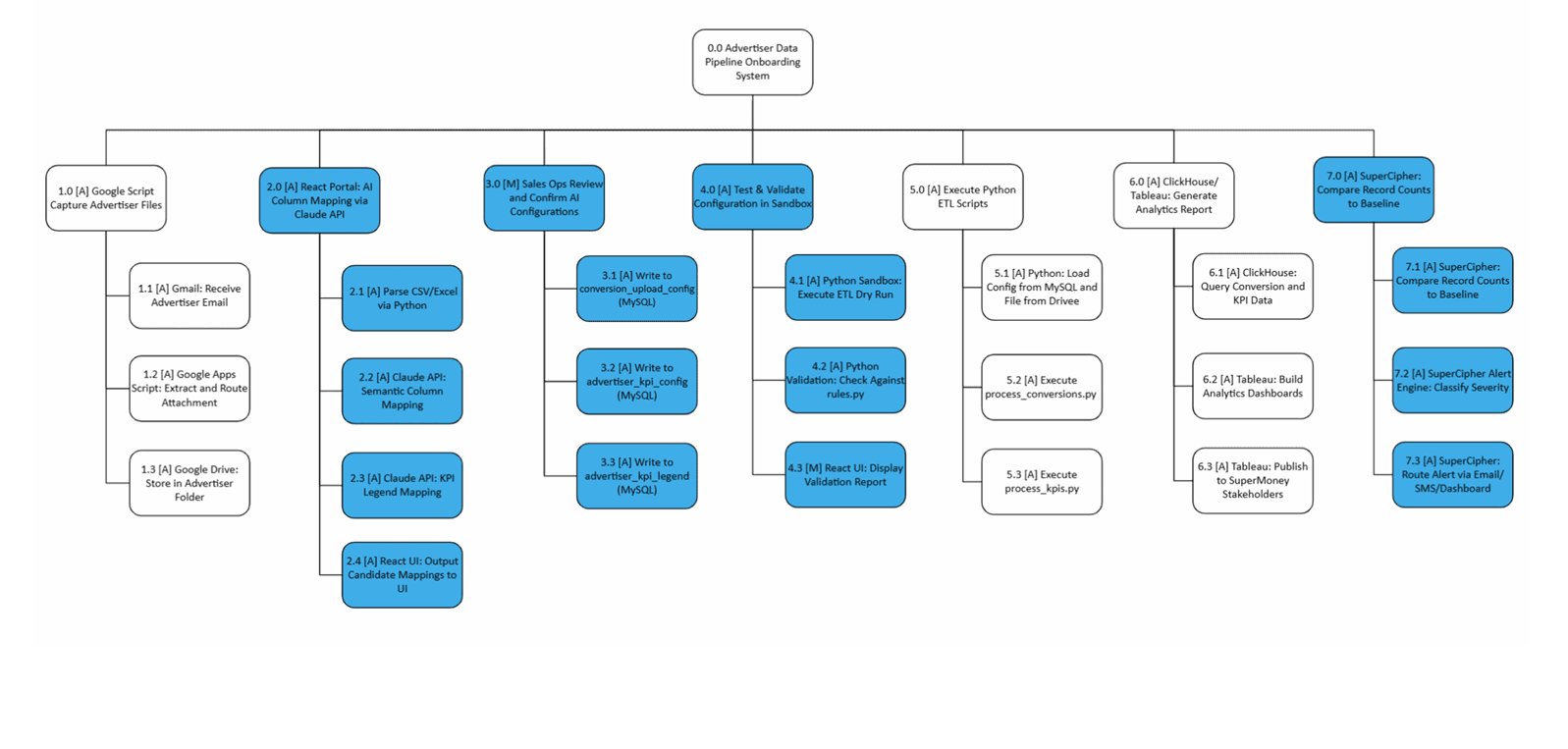
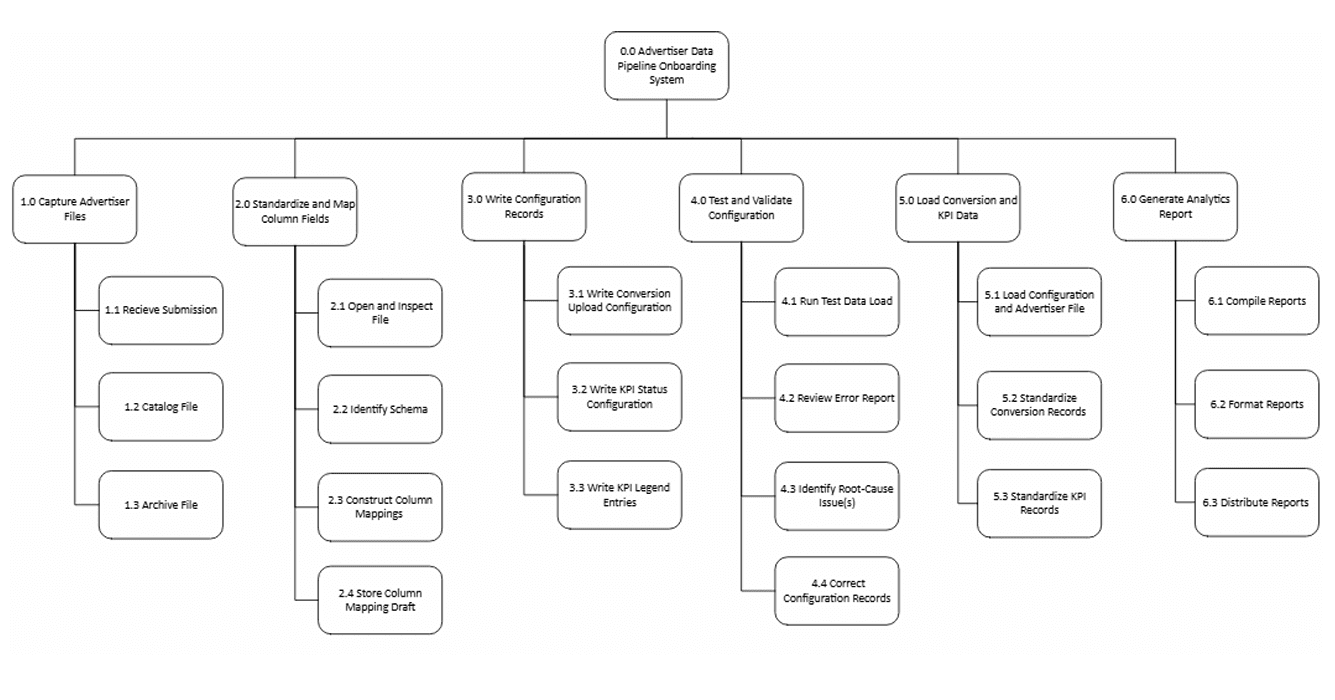
The method: full systems analysis, then a designed solution. We treated the onboarding process as a system and worked it end to end before proposing anything, using causal chain analysis, PIECES, and SWOT to trace the symptoms back to their structural cause. We mapped the current and proposed processes in full DFDs, use case diagrams, and ER models.
The proposed system, SuperCipher, replaces manual SQL with three things:
AI semantic column mapping. The Claude API reads each file's headers and sample data and infers what every column means, rather than relying on exact name matches, so it handles formats it has never seen.
A pre-execution dry run. Before anything reaches production, the system runs the file through a sandboxed copy of the real ETL logic and blocks deployment until zero critical errors remain. Errors get caught before they happen, not weeks after.
Structured forms with schema enforcement. SalesOps configures advertisers through a guided UI instead of writing SQL, moving the work off the engineering team entirely.
My role: I worked primarily on the process modeling, translating what the company told us into the logical and physical DFDs, and used AI as a thinking tool to understand the existing ETL pipeline well enough to model it correctly.
OUTCOME
The proposed system brings onboarding from 2 to 4 hours down to under 10 minutes and developer involvement from 100% to roughly 10% for edge cases only.
Pre-execution validation drives the error queue toward zero.
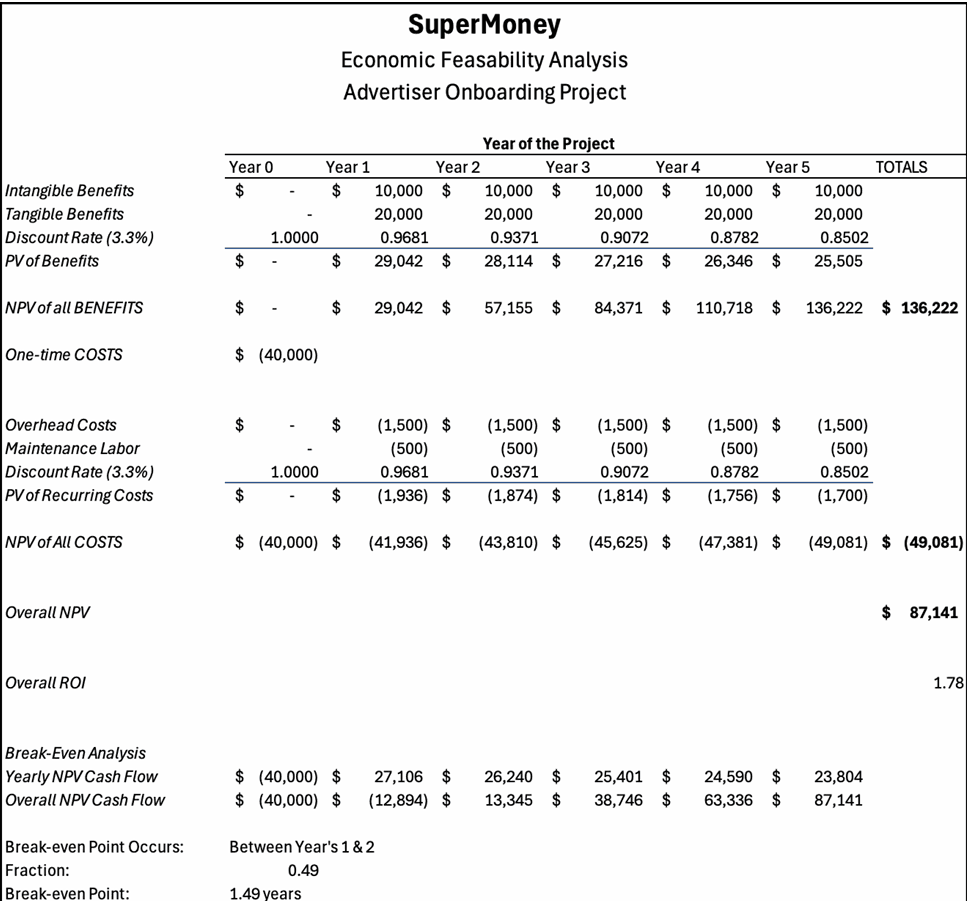
Financial model: $40,000 one-time build against $30,000 in quantified annual benefit, a 172% ROI and payback inside 1.5 years.
What I took from it. The biggest lesson was about coordinating a team, not the analysis itself. We started organized and ahead of schedule, then lost rhythm mid-project when tasks drifted to a "whoever picks it up" basis and accountability slipped. The fix I'll carry forward is structured weekly meetings with clear owners, and formally reassigning a task the moment someone else takes it over so nothing falls through.